Meme Coin Trading, Inside a $1,000,000 Run
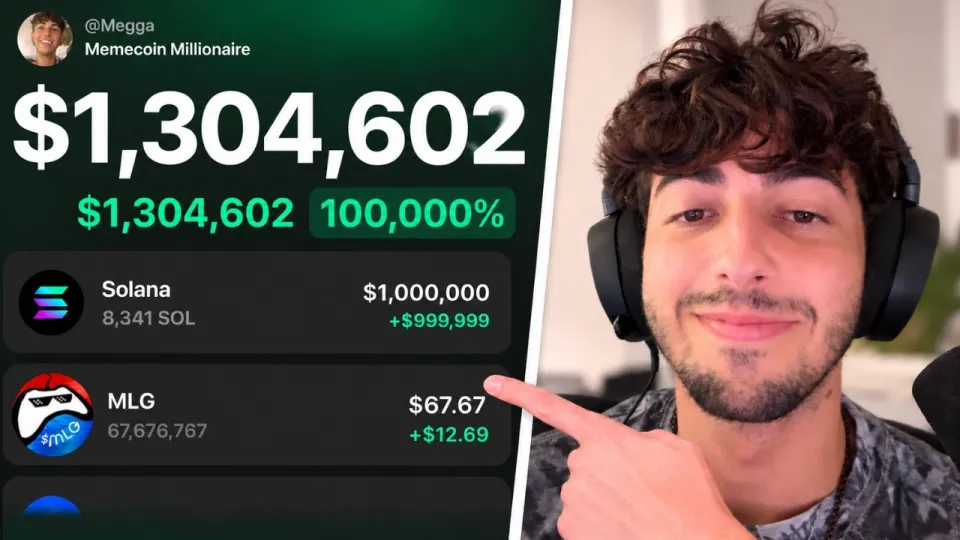
Video: How I Made $1,000,000 Trading Memecoins (FULL BREAKDOWN)
Need articles like this for your video? They help promote it on YouTube and Google — order them in the Telegram bot @sat_sit_bot. Articles with your video embedded are written and posted by the bot itself — on popular topical sites (no ads). Free trial — 50 articles.
· based on the channel Megga
A $1,000,000 result in meme coin trading is built from many small, disciplined bets on early-stage tokens rather than one lucky call, with most of the work happening in the "trenches" — the low-cap, high-volatility end of the market where new launches appear and die within hours. Megga's full breakdown of that run is available alongside a free course on the strategy, which covers the playbook behind the result. The honest framing matters: the number is the output of a process, not a shortcut.
What meme coin trading actually involves
Meme coins are tokens with no cash flow and no product — their price is driven entirely by attention, narrative and liquidity. That makes the market structurally different from trading established crypto assets: there are no earnings to model, no valuation floor, and no guarantee that a token will still be tradeable tomorrow. The edge comes from being earlier than the crowd, sizing correctly, and exiting into demand that someone else provides.
A realistic meme coin workflow looks like this:
- Source — track new launches through social feeds, on-chain trackers and group chats where early buyers share contracts.
- Screen — check holder distribution, liquidity locks, contract permissions and whether the team wallet has a history of dumping.
- Size — decide the position before entering, based on how much can be lost without damaging the account.
- Enter early — the goal is to buy before the narrative is obvious, which means accepting a high failure rate.
- Exit into strength — sell in tranches as volume arrives, not at a fantasy target.
The uncomfortable truth raised in the comments under the breakdown is correct: money has to come from somewhere. Every profitable exit is someone else's entry, and the participants who buy late without a plan are the liquidity that funds the winners.
The mechanics behind a seven-figure run
A $1,000,000 outcome in this market is a function of position sizing and repetition more than prediction. Three mechanics do most of the work.
Asymmetric bets. Early entries on low-cap tokens can return multiples, while the maximum loss is capped at the position size. A trader who risks 1–3% of the account per idea and occasionally catches a 10x or 50x does not need a high win rate to compound.
Volume of attempts. Most launches go to zero. The profitable traders are not the ones who pick winners every time; they are the ones who take hundreds of shots with consistent sizing so that a handful of outliers pay for everything else.
Speed and infrastructure. Fees, execution speed and wallet hygiene directly affect returns. Megga points to Padre as the preferred low-fee platform: https://trade.padre.gg/rk/megga. Slippage on a fast-moving token can erase an edge that took hours to find.
What this run does not show is the losing side of the ledger. The breakdown is framed around the journey — being alone in the trenches, taking losses, getting tested and staying consistent — because the drawdowns are the part that determines whether a trader survives long enough to catch the upside.
Risk control that keeps the account alive
Survival is the strategy in meme coin trading; a trader who blows up the account cannot benefit from the next asymmetric opportunity. Practical guardrails:
- Fixed risk per trade. Define the maximum loss before entry and treat it as spent money, not as a position to average down.
- Tranche exits. Sell part of the position on the first strong move, keep a runner for the tail, and never let a winner turn into a loser.
- Wallet separation. Keep trading funds in a dedicated wallet with limited approvals, and revoke permissions regularly — phishing and drained wallets are a recurring cause of losses in this market.
- Liquidity checks. A token with thin liquidity cannot absorb a large exit; size the position to what the pool can actually pay out.
- Stop after a tilt. After a large loss, the instinct is to win it back immediately, which is exactly when sizing slips.
How much screen time the trenches really take
Trading meme coins at a professional level is a full-time job measured in screen hours, not minutes. The 9-to-12-hour sessions that come up repeatedly in discussion of this run are not passive watching — they are a loop of scanning new launches, reading chats, checking contracts, managing open positions and logging what worked.
What those hours should contain:
- Pre-market preparation — a watchlist of narratives and wallets worth following before anything pumps.
- Live monitoring — tracking volume, holder growth and social velocity on candidates.
- Execution — entering and exiting with pre-set sizes and targets.
- Review — recording every trade with the reason for entry and exit, so patterns become visible.
The review step is where most of the improvement happens. Hours spent scrolling without a written record produce activity, not skill. A trader with a job can compress the same loop by narrowing the watchlist, trading fewer setups and using alerts instead of constant screen-watching — the constraint is focus, not hours.
Reading narratives early and avoiding the bait
Early entry is a research problem, not a guessing game. The question worth asking about any new token is whether the narrative has a reason to spread — a meme format people already recognise, a community forming around it, or a catalyst that will put it in front of new buyers.
Signals that a launch deserves attention:
- organic discussion growth rather than paid promotion bursts;
- holder count rising alongside price, not just price;
- liquidity added and locked, with no single wallet holding a dominant share;
- a team or deployer with a visible history rather than a fresh wallet.
Signals that it is bait:
- a chart that goes vertical before anyone can explain why;
- a contract with hidden mint or freeze permissions;
- a community that talks only about price and never about the token;
- sellers concentrated in a handful of wallets.
Verifying whether a narrative has legs is partly technical and partly social. Technical checks confirm the contract is not designed to trap buyers; social checks confirm real people are paying attention for a reason other than the price chart. Neither is reliable alone.
Questions traders ask before starting
Most of the doubts around this run fall into a few predictable categories, and they deserve direct answers rather than hype.
Starting capital. The size of the account matters less than the sizing rules applied to it. A trader working with a modest all-time profit can still build a track record by risking small fixed amounts and documenting results; what networking and group chats provide is information flow and accountability, not a minimum balance.
Drawdowns and losses. A 200x win followed by a drained wallet and a string of losses is a common pattern, and the recovery path is not more risk — it is returning to basics: smaller positions, fewer setups, written rules, and a break from trading until the emotional state settles.
Time constraints. Having a job does not disqualify anyone, but it does change the strategy: fewer trades, longer holds on higher-conviction ideas, and alerts instead of live monitoring.
Ethics and sustainability. The criticism that profits come at other participants' expense is structurally accurate in a zero-sum market. The response is not denial but transparency about risk and a refusal to promote tokens as safe.
Useful links
- Free course on the strategy behind the run: https://whop.com/checkout/plan_Jfp7BxTu8pWGu/?session=chs_HL1L0oQ9QcTEa3
- Low-fee trading platform referenced in the breakdown: https://trade.padre.gg/rk/megga
- Live streams: http://www.twitch.tv/megga
- Short-form updates: https://www.tiktok.com/@meggafaze
- Commentary and market notes: https://twitter.com/megga
Final takeaway
A seven-figure meme coin run is a story about process, not prophecy: hundreds of sized bets, a high failure rate absorbed without blowing up the account, and enough screen time to recognise patterns before the crowd does. The channel Megga presents the breakdown as a journey through the trenches, losses included, which is the most useful part of it for anyone considering the same path. Treat the headline number as an outcome of discipline and repetition, and treat every token as capable of going to zero. Start with the free course before risking capital.
Key takeaways
- The $1,000,000 result came from trading meme coins in the "trenches" — early, low-cap, high-risk launches — not from blue-chip crypto.
- Megga's breakdown frames the run as a process story: months of losses, drawdowns and screen time before the upside.
- A free course on the strategy is offered via Whop, and Padre is named as the preferred low-fee trading platform.
- Trading volume comes from other participants: every profitable exit requires someone buying the top, so risk management matters more than conviction.
- Commenters' main questions are about how to use 9–12 hour sessions, how to verify a narrative early, and how to trade with a job.
Questions & answers
How much money do you need to start trading meme coins?
There is no fixed minimum, but the sizing rules matter more than the balance. Risking a small fixed percentage of the account per idea lets a trader build a track record on modest capital, and the failure rate of early launches means the first priority is not losing the account. Networking and group chats help with information flow, not with meeting a capital threshold.
How do you tell whether a new meme coin narrative will actually work?
Check two things separately: the contract and the crowd. On the technical side, verify holder distribution, liquidity locks and whether the contract can mint or freeze tokens. On the social side, look for organic discussion growth and holders increasing alongside price rather than a paid promotion burst. Neither check is reliable on its own.
Can you trade meme coins with a full-time job?
Yes, but the strategy has to change. Fewer setups, longer holds on higher-conviction ideas and price alerts instead of constant monitoring compress the same workflow into a smaller window. The limiting factor is focus and record-keeping, not the number of hours at the screen.
Why do so many traders lose money in the trenches?
Because every profitable exit requires someone buying at a higher price, and late buyers without a plan become that liquidity. Add thin liquidity, phishing and wallet drains, and position sizing errors, and the losses compound quickly. Survival through strict risk control is what allows a trader to still be present when an asymmetric opportunity appears.
Source: How I Made $1,000,000 Trading Memecoins (FULL BREAKDOWN) · Markdown version